
Sertraline is an antidepressant, but describing it only as a medicine for depression leaves out a large part of how it is actually used. It belongs to the selective serotonin reuptake inhibitor, or SSRI, group and is prescribed for several mood and anxiety-related conditions, with treatment often continuing well beyond the first few weeks in which a patient begins to notice whether it is helping. Unlike medicines whose effect can be judged after one or two doses, sertraline usually takes time, and early side effects may appear before the full therapeutic response develops. The same is true at the other end of treatment, because stopping suddenly after longer use can bring on withdrawal-like symptoms, which is why both starting sertraline and eventually reducing or stopping it deserve some attention.
Sertraline Offers from Mexico
Available through our partner pharmacies
-
H-E-B México GenericUSD $3.32
-
Farmacias Guadalajara GenericUSD $13.65
-
Farmacias Benavides BrandUSD $22.81
-
Farmatodo México BrandUSD $39.26
-
WeCare Pharma BrandUSD $114.07
Disclaimer! This website is intended for general information only and does not operate as an online pharmacy. Speak with a doctor or another qualified healthcare professional before buying or using any medication.
What Sertraline Treats
Sertraline changes serotonin signaling in the brain by inhibiting serotonin reuptake. The same mechanism can be useful across more than one psychiatric condition, although the target symptoms, dose progression and expected duration of treatment can differ considerably.
- Major depressive disorder. Sertraline is widely used for depressive episodes and continued treatment after an initial response.
- Obsessive-compulsive disorder. It is one of the SSRIs used for OCD, where treatment can require a different dose range and longer evaluation period than ordinary short-term symptom treatment.
- Panic disorder. Sertraline can reduce panic symptoms when used as part of a structured treatment plan.
- Post-traumatic stress disorder. PTSD is another established use for sertraline.
- Social anxiety disorder. Sertraline is also used for persistent social-anxiety symptoms that cause significant functional impairment.
- Premenstrual dysphoric disorder. Certain treatment schedules use sertraline for PMDD as well.
How Sertraline Varies in Mexico
Current Mexican pharmacy catalogs contain pharmacy-label generics and a number of commercial brands. Benavides currently lists its own sertraline 50 mg in both a 14-tablet presentation and a 28-capsule presentation, while other available names include Sertex, Serenata, Equivac and Altruline.
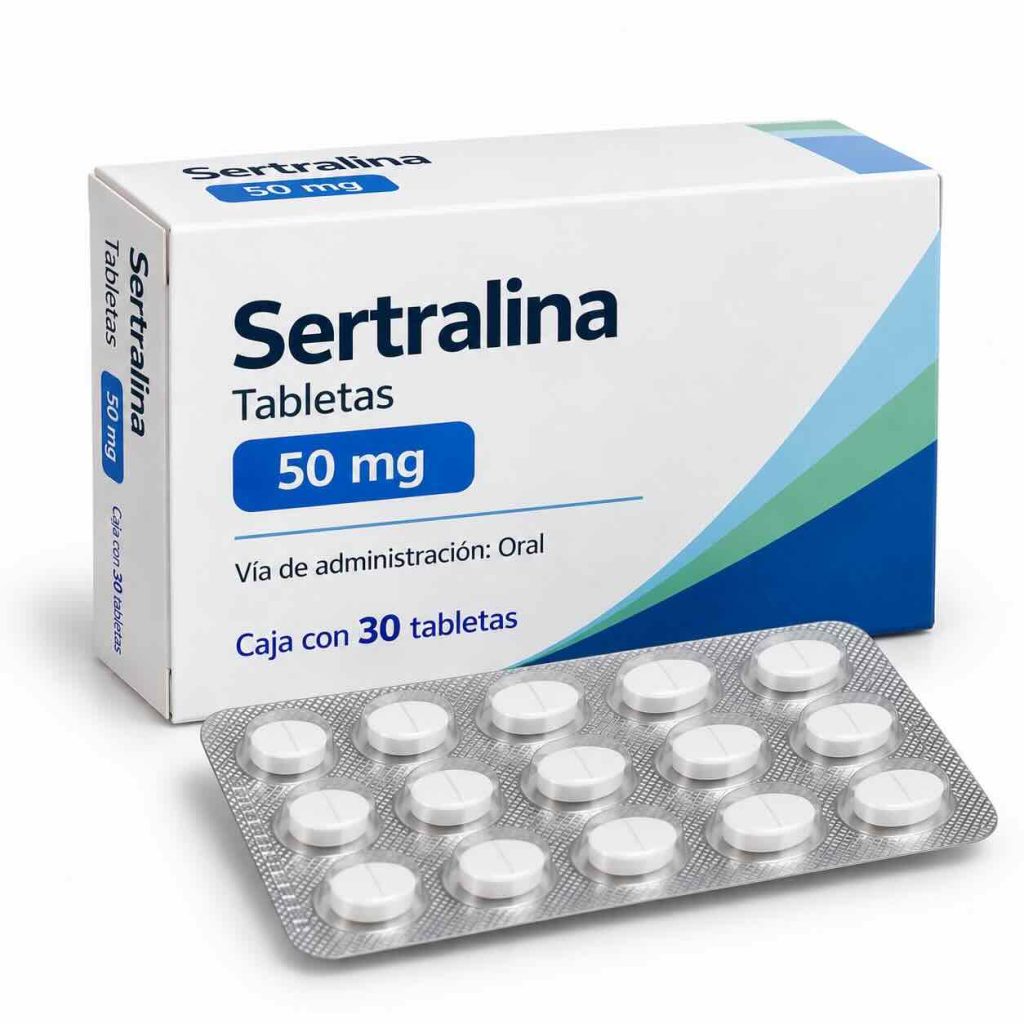
Farmacias del Ahorro currently lists Serenata 50 mg in a 30-tablet package. This means a search for “sertraline 50 mg” can return 14, 28 and 30-unit packages as well as both tablets and capsules, even before the customer begins comparing manufacturers or price.
| Mexican Listing Example | Strength | Form / Quantity |
|---|---|---|
| Farmacias Benavides private label | 50 mg | 14 tablets |
| Farmacias Benavides private label | 50 mg | 28 capsules |
| Sertex | 50 mg | 14 or 28 tablets |
| Serenata | 50 mg | 30 tablets |
Safety Information
Suicidal thoughts and behavioral changes. Antidepressants carry an important warning about increased suicidal thoughts and behavior in children, adolescents and young adults during certain stages of treatment. Any new suicidal thinking, severe agitation or major behavioral change requires prompt attention regardless of age.
Serotonin syndrome. Excessive serotonergic activity can become dangerous, particularly when sertraline is combined with other serotonin-enhancing medicines. Agitation, confusion, fever, sweating, tremor, muscle rigidity, diarrhea and rapidly changing vital signs can be warning features.
Bleeding. SSRIs can increase bleeding tendency, particularly when combined with aspirin, NSAIDs, anticoagulants or other medicines that affect clotting.
Low sodium. Hyponatremia can occur, with older adults and some patients using diuretics at greater risk. Confusion, marked weakness, severe headache or seizures require medical assessment.
The First Weeks Can Feel Different From the Later Treatment
Some adverse effects can begin shortly after sertraline is started, while improvement in mood, anxiety or obsessive symptoms generally develops more gradually. Nausea, loose stools, changes in sleep, headache, restlessness or sexual side effects may therefore appear before a patient can fairly judge the therapeutic benefit.
This timing is one reason clinicians often review treatment after initiation instead of expecting a final answer after several days. Worsening agitation, severe mood changes, suicidal thoughts or another significant deterioration requires prompt professional assessment rather than waiting for the next routine follow-up.
When Sertraline Affects Sexual Function
Reduced libido, difficulty reaching orgasm and other sexual effects are well-recognized with SSRIs, but patients sometimes stop treatment without mentioning them because they assume the problem is unrelated or uncomfortable to discuss. That can leave both the adverse effect and the underlying psychiatric condition poorly managed.
If sexual effects become persistent, a clinician can review timing, dose, other medicines and possible treatment alternatives. Quietly stopping sertraline tends to create more uncertainty than addressing the problem directly.
Stopping Sertraline Takes Planning
Feeling better does not automatically mean that sertraline can be stopped from one day to the next. After regular use, the body has adapted to the medicine, and an abrupt stop can trigger discontinuation symptoms such as dizziness, nausea, irritability, anxiety, unusual sensory sensations, headache, vivid dreams or trouble sleeping. These symptoms can begin within days and sometimes make it difficult to tell whether the original condition is returning or the body is reacting to the sudden change in medication.
For that reason, sertraline is commonly reduced in steps instead of being stopped all at once. How quickly that happens depends on the current dose, how long treatment has lasted, how the patient responded to previous dose changes and whether discontinuation symptoms have appeared before. Someone who has used sertraline for a few months may follow a different schedule from a patient who has taken it for several years.
The final part of treatment also deserves the same attention as the beginning. If symptoms return while the dose is being reduced, or if the reduction itself causes significant problems, the taper may need to be slowed or adjusted rather than pushed through on a fixed timetable.