
Omeprazole (Prilosec) is one of those medicines many people recognize long before they ever need to read the package carefully, because it has been used for decades to reduce stomach acid and remains common in both prescription and non-prescription treatment. It belongs to the proton pump inhibitor, or PPI, group and works by blocking part of the acid-producing process inside the stomach.
This makes it useful for reflux, acid-related irritation, peptic ulcers and several other conditions where reducing acid gives damaged tissue time to heal. Omeprazole can also become part of a larger treatment plan, including regimens for Helicobacter pylori.
What it does not do is identify the reason for recurring stomach symptoms, which becomes important when heartburn or pain keeps returning despite treatment.
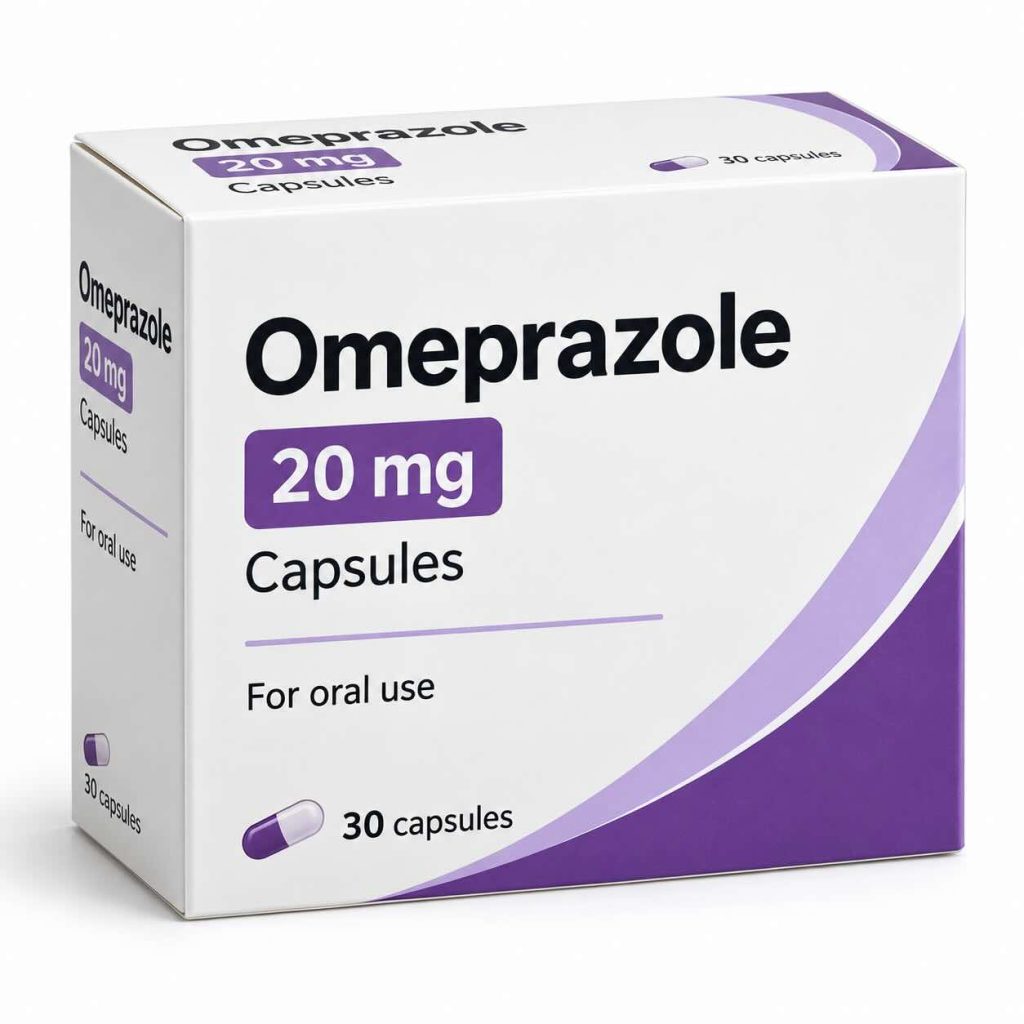
Omeprazole Offers in Mexico
Available through our partner Mexican pharmacies
-
Farmacias Guadalajara GenericUSD $0.98
-
Farmacias YZA GenericUSD $3.46
-
Farmacias del Ahorro BrandUSD $5.30
-
Farmacias Similares GenericUSD $3.10
-
Farmacias Benavides BrandUSD $26.66
Disclaimer! This website is intended for general information only and does not operate as an online pharmacy. Speak with a doctor or another qualified healthcare professional before buying or using any medication.
What Is Omeprazole Used For?
Omeprazole is mainly used when stomach acid is causing symptoms, delaying healing or contributing to an existing gastrointestinal condition. The reason for treatment matters because a short course for occasional acid-related symptoms is very different from long-term treatment for a diagnosed disease.
- Reflux and acid-related symptoms. Omeprazole is commonly used for gastroesophageal reflux disease (GERD), reflux esophagitis, heartburn and other symptoms related to excessive gastric acid production.
- Gastric and duodenal ulcers. By reducing acid exposure, the medicine can help an ulcer heal and may also be used when ulcer risk is connected with medicines such as NSAIDs.
- H. pylori treatment. Omeprazole can be included in an eradication regimen for Helicobacter pylori, but in this situation it is only one part of the treatment and is used together with other medicines selected for the regimen.
- Conditions with unusually high acid production. More specialized uses include Zollinger-Ellison syndrome and other hypersecretory conditions where acid production is far above normal.
Safety Information
Contraindications. Omeprazole should not be used by someone who has had a serious allergic reaction to omeprazole, another substituted benzimidazole or an ingredient in the product. Current prescribing information also contraindicates its use with medicines containing rilpivirine.
Side effects. Headache, abdominal discomfort, nausea, diarrhea, vomiting and gas are among the more commonly reported reactions. Medical review becomes more important if symptoms are severe, persistent or accompanied by a new rash, kidney-related symptoms, significant diarrhea or another reaction that began after treatment was started.
Drug interactions. Omeprazole affects CYP2C19 and can change how some other medicines behave. One of the better-known examples is clopidogrel, whose antiplatelet effect can be reduced when used with omeprazole. Other important interactions can involve high-dose methotrexate, rifampin, St. John’s wort and medicines whose absorption depends strongly on stomach acidity.
Long-Term Omeprazole Use Needs a Different Approach
Taking omeprazole for a few days because of occasional acid-related symptoms is not the same situation as taking it every day for months or years. Longer treatment may be completely appropriate for some patients, but by that point the reason for continuing the medicine should be clear instead of allowing it to become something that is taken indefinitely simply because symptoms return when a dose is missed.
Prolonged PPI treatment has been associated with several issues that deserve attention in the right patient. Low magnesium can occur, particularly after many months of treatment, vitamin B12 absorption may become a concern after very long use, and long-term or high-dose PPI therapy has been associated with an increased risk of certain fractures. PPIs have also been linked with C. difficile-associated diarrhea, while acute tubulointerstitial nephritis is a recognized but less common kidney-related reaction.
There is another reason not to use symptom relief as the only test of whether everything is fine. Omeprazole can make upper gastrointestinal symptoms feel better without explaining why they were present in the first place, and official prescribing information specifically notes that improvement does not rule out gastric malignancy. Persistent or repeatedly returning symptoms, difficulty swallowing, unexplained weight loss, vomiting blood, black stools or other unusual changes deserve medical evaluation instead of simply increasing or repeatedly restarting acid suppression.
Common Forms and Doses
Mexico has much more than one standard box of omeprazole, and this is where looking only at the active ingredient can become misleading. Current Mexican product listings show several strengths and pharmaceutical forms, while the package quantity can vary considerably from one manufacturer to another.
- 10 mg oral products are available in some capsule and enteric-coated tablet lines. This lower strength appears in Mexican products such as Losec A, Inhibitron and Mopral, although the number of capsules or tablets in the package differs by brand.
- 20 mg capsules are probably the presentation customers will see most often in ordinary retail pharmacies. Current listings include packages of 7, 14, 30, 60 and even 120 capsules depending on the pharmacy and manufacturer, so “20 mg omeprazole” still does not tell you how much medicine is actually inside the box. Farmacias YZA, Farmacias del Ahorro and Farmacias Benavides all currently list 20 mg capsule products in different quantities.
- 40 mg oral products are also present in the Mexican market, including capsule presentations such as Inhibitron F and Ulsen PCS. These should not be treated simply as “two 20 mg capsules in one,” because the strength selected should match the treatment plan rather than being chosen according to what happens to be available.
- 40 mg injectable omeprazole also exists in Mexico, but this is a very different product from the capsules people normally buy for home use. Mexican prescribing information lists a 40 mg vial with diluent intended for injection, and this type of product belongs in a clinical setting where the route of administration has been specifically selected.
Alternatives Available in Mexico
Omeprazole is not the only medicine used to control gastric acid in Mexico, and another product may sometimes make more sense because of a drug interaction, previous response, treatment plan or the condition being treated. This does not mean that every acid medicine can be exchanged tablet for tablet, because the drugs below differ in potency, timing, interactions and approved uses.
Other proton pump inhibitors. Mexican pharmacy catalog include pantoprazole, esomeprazole, lansoprazole and rabeprazole. They work through the same general acid-suppression pathway as omeprazole, but they are separate medicines with their own dosing and interaction profiles. Pantoprazole and esomeprazole, for example, are currently listed in ordinary Mexican pharmacy catalogs, while lansoprazole and rabeprazole also appear in Mexican prescribing databases for reflux and ulcer-related treatment.
- Pantoprazole – another PPI widely available in Mexico, commonly in 20 mg and 40 mg tablet presentations.
- Esomeprazole – closely related to omeprazole but still a separate medicine; Mexican products include tablet, capsule and some specialist formulations.
- Lansoprazole – another PPI used for reflux and acid-peptic conditions.
- Rabeprazole – available in Mexico in enteric-coated products and used for similar acid-related conditions.
Non-PPI options. Famotidine works through H2 receptors instead of the proton pump and can be useful in some acid-related conditions, while antacids, alginates or products containing magnesium and aluminum compounds can provide more immediate symptom relief in certain situations. Sucralfate is another product used in selected ulcer-related cases. These medicines do different jobs, so choosing one instead of omeprazole depends on what is actually being treated rather than simply which product is cheaper or easier to find.