
Loratadine is an allergy medicine whose value is easiest to see in the ordinary symptoms that keep returning: sneezing on the way to work, a runny nose during pollen season, or itchy eyes after exposure to an animal. It is an antihistamine that blocks the action of histamine at H1 receptors. That can make allergic symptoms less troublesome without treating the pollen, dust or other trigger itself. Loratadine is also used for hives, where the problem may appear on the skin rather than in the nose.
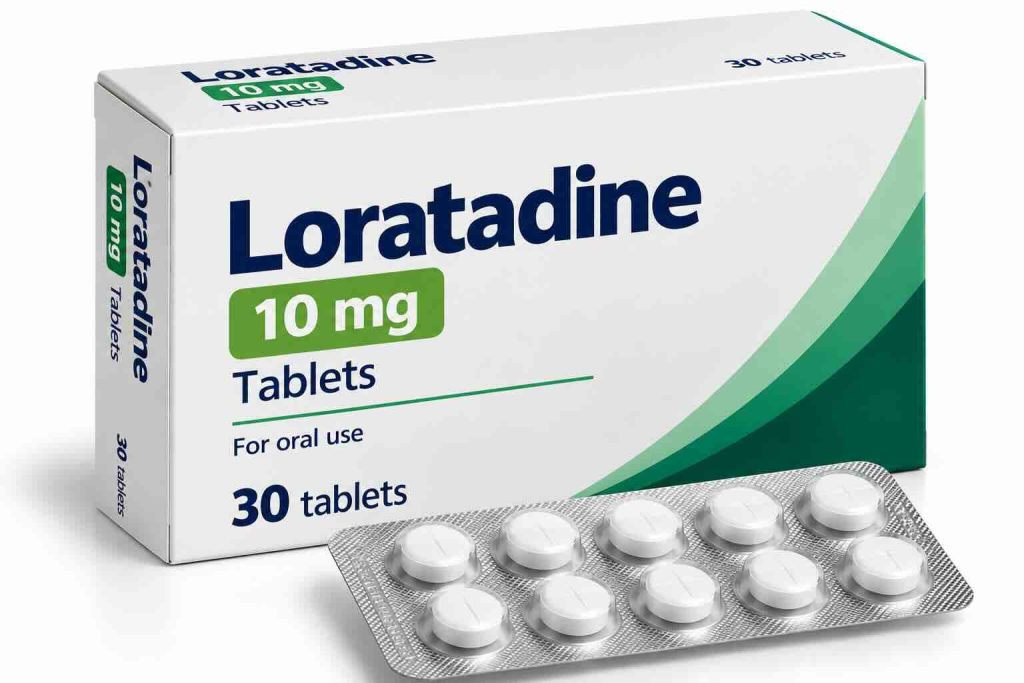
Its familiar 10 mg tablet can look like a simple purchase, but the exact product still matters. Mexican pharmacy searches place plain loratadine beside medicines that add a decongestant, a cough medicine or a corticosteroid. Those combinations have different ingredients and precautions. The first question is therefore whether the box contains loratadine alone, not which result has the lowest price.
Loratadine Offers in Mexico
Available through our partner pharmacies
-
Best Offer Farmacia Mexicana GenericUSD $32.99
-
Farmacias Guadalajara BrandUSD $10.98
-
Vitau GenericUSD $1.34
-
WeCare Pharma BrandUSD $13.19
-
Farmacias Benavides BrandUSD $13.89
Disclaimer! This website is intended for general information only and does not operate as an online pharmacy. Speak with a doctor or another qualified healthcare professional before buying or using any medication.
What Loratadine Treats
Histamine released during an allergic reaction can contribute to sneezing, nasal itching, a runny nose and watery eyes. Loratadine blocks that signal and may ease the symptoms whether the trigger is seasonal pollen or an indoor exposure such as dust mites. The pattern still matters: an occasional reaction after visiting a particular place calls for a different practical plan from symptoms that return every day.
- Allergic rhinitis: the familiar pattern includes sneezing, itching and a runny nose. Loratadine can reduce symptoms, but it does not remove the trigger.
- Hives: itchy raised welts may improve with an antihistamine. New or recurring hives still deserve attention to their cause, especially after a medicine, food or insect sting.
- Other problems: a structural nasal blockage, bacterial infection or severe allergic reaction cannot be treated simply by taking a loratadine tablet.
Trouble breathing, throat swelling or faintness requires immediate care. A box labeled for allergies should not make a rapidly worsening reaction seem routine.
Choosing the Right Form
Plain tablets, dissolving tablets and liquids can all contain loratadine, yet they are not identical purchases. A standard Mexican adult listing commonly shows 10 mg tablets in boxes of 10 or 20. A 5 mg orodispersible tablet is also listed under a branded product. That smaller number does not mean it is a weaker version of a 10 mg box to choose by price; it is a distinct strength and form, with instructions that may suit a different patient or plan.
| Form seen in Mexican listings | Example | Point to check |
|---|---|---|
| Standard tablet | 10 mg, 10 tablets | Plain loratadine, without extra active ingredients |
| Standard tablet | 10 mg, 20 tablets | Same unit strength but a different package quantity |
| Orodispersible tablet | 5 mg, 10 tablets | Different strength and instructions for handling the tablet |
| Oral liquid | Strength stated per milliliter | Measure the prescribed volume rather than comparing bottle size |
The dissolving form is useful for people who have difficulty swallowing a conventional tablet. It should still be removed from its packaging and taken according to that product’s directions. A liquid may be useful when a measured dose is needed, but a caregiver has to read the concentration on the bottle. Switching between forms should follow the label or the advice of a clinician or pharmacist, particularly for a child.
Nasal Congestion
A blocked nose can occur with allergies, but plain loratadine is an antihistamine, not a dedicated decongestant. Sneezing may improve while a nose still feels obstructed. That is not a reason to increase the dose independently; it is a reason to review what is causing the blockage and whether another treatment is appropriate.
- Plain loratadine: one active ingredient, aimed at histamine-related symptoms.
- A product with phenylephrine: adds a decongestant and different precautions, particularly for some people with cardiovascular conditions.
- A product with betamethasone: adds a corticosteroid. It is not merely a stronger version of plain loratadine.
A viral cold may also cause a runny nose and sneezing. Fever, sore throat or a new cough can change the likely explanation. Read the active ingredients before treating one allergy box as a substitute for another, and ask a clinician when the symptom pattern does not fit a familiar allergy.
Daily Use
Many adult 10 mg products are labeled for one dose in a 24-hour period and can be taken with or without food. The instructions on the chosen box still govern the exact form. A 5 mg dissolving tablet or a liquid should not be handled by guessing from the familiar 10 mg pack.
- Read the strength and form before the first dose, especially if the manufacturer has changed.
- Notice whether the medicine causes sleepiness before driving or doing work that requires full attention.
- If a dose is missed, follow the label or pharmacist’s advice; do not take two doses together to compensate.
- If relief regularly wears off too soon, review the symptom pattern instead of adding extra tablets.
Loratadine in Mexico
Mexican pharmacies list low-cost products under the ingredient name loratadina, as well as brands such as Clarityne and Sensibit. A generic and a brand may contain the same active ingredient at the same strength, but the packs can differ in quantity, tablet form and inactive ingredients. That matters for someone who is comparing a 10-tablet box with a 20-tablet box or who needs an orodispersible formulation.
The names are also easy to misread. “Loratadina” on a product page may appear in a search for a combined product containing loratadine plus betamethasone or phenylephrine. The second ingredient is not a minor packaging detail. A customer looking for plain 10 mg loratadine should verify that the entire active-ingredient line says only loratadine and that the route and tablet type match the intended use.
Price comparisons should use like-for-like packs. A 20-tablet generic can cost less than a 10-tablet brand box even before considering the number of tablets, while a 5 mg dissolving pack may cost more despite containing fewer total milligrams. Neither observation says anything by itself about which formulation the patient should use. The right box is the one that matches the chosen strength, form and instructions.
When to Seek Advice
Repeatedly buying an antihistamine can make sense for a known recurring allergy, but a change in the pattern deserves review. A clinician may look for a different cause when the nose is blocked on only one side, when symptoms persist without typical itching or sneezing, or when relief becomes much less reliable than before.
- Recurring hives: discuss their timing, possible triggers and whether a new medicine was started.
- Eye pain or changed vision: do not treat these as ordinary itchy eyes, even if the eye also looks red.
- New fever or cough: consider whether an infection, rather than an allergy, better explains the symptoms.
A note about where symptoms occurred and what loratadine actually relieved can make the appointment more useful. It is evidence for a discussion, not a diagnosis made from a diary alone.
When Relief Is Incomplete
A person can take loratadine correctly and still have troublesome symptoms. That does not always mean the medicine has failed. An antihistamine may help itching and sneezing more than persistent blockage, and a person may continue to meet the same trigger every day. If symptoms remain significant, the next step is to review the diagnosis, the exposure pattern and the treatment plan with a clinician or pharmacist. Taking extra loratadine without advice is a poor substitute for that review.
It can also help to distinguish a brief exposure from a long allergy season. Someone who develops symptoms only after visiting a house with a cat has a different practical problem from someone whose bedroom dust causes symptoms every morning. The medicine may be one part of management, but reducing an identified exposure or using another appropriate treatment may matter as much as choosing a larger box. A record of which symptoms improve can make the next appointment more productive.
Children require particular care with product selection. A small person is not automatically given a fraction of an adult tablet, and the available 5 mg orodispersible product does not itself establish the right dose for every child. Age, form and instructions need to be checked against the specific product label or a clinician’s advice. The same principle applies to liquids, where a bottle may look familiar even when the concentration differs.
Tracking Allergy Symptoms
People often remember the worst day of an allergy season but not the pattern around it. A short record is enough to show whether symptoms arrive outdoors, after cleaning a room, during a work shift or near an animal. It can also show whether a tablet helped the itchy eyes but did little for a blocked nose.
- Write the date, place and likely exposure.
- Name the symptom: sneezing, itching, watering, hives or blockage.
- Note when loratadine was taken and which symptom changed.
- Record any new medicine, because a rash after a new drug may have another explanation.
A traveler may find that symptoms belong to a particular building or climate rather than a month of the year. That observation can explain why relief differs from one trip to another without implying that the medicine itself changed. The record is most useful when it leads to a more specific conversation with a clinician.
Safety Information
Loratadine is generally less sedating than older antihistamines, but its “non-drowsy” reputation should not be read as a guarantee for every person. The useful safety question is what changed after starting the specific product: a mild headache is different from rapidly developing swelling, and a reaction to a combination medicine cannot automatically be blamed on loratadine alone.
Common Side Effects
Headache, tiredness and some drowsiness are among the effects reported with loratadine. Mexican product information also lists dry mouth, nausea, stomach discomfort and rash. Many effects are mild, but an effect that persists, interferes with work or repeatedly follows a dose is worth discussing with a clinician or pharmacist. A person who feels sleepy should avoid driving until they know how they respond.
| What a person notices | Why it matters | Reasonable next step |
|---|---|---|
| Headache or fatigue | May be temporary, but can also have another cause | Record when it began and seek advice if it continues |
| Sleepiness | Can affect driving or work even with a “non-drowsy” product | Do not take extra doses; discuss a troublesome effect |
| Dry mouth or nausea | May make a daily product difficult to tolerate | Ask whether the symptom could be related to the medicine |
| New rash | Could be an adverse reaction or part of the underlying illness | Have a clinician review its timing and severity |
A symptom diary can help distinguish a side effect from the allergy being treated. If hives were present before the first dose, their continued appearance has a different meaning from a new rash that begins shortly after the medicine is taken. The patient should describe the timing rather than decide from the appearance alone.
Rare but Serious Reactions
Severe allergy to the medicine itself is possible. Swelling of the lips, tongue or throat, trouble breathing, or faintness after a dose needs emergency care. Do not take another tablet to see whether the reaction happens again. Rare reports also include palpitations or a fast heartbeat and abnormal liver function. A new irregular or racing heartbeat, or yellowing of the skin or eyes, should be assessed promptly rather than treated as an ordinary allergy symptom.
These events are uncommon. Listing them does not mean they are expected in someone who takes loratadine at the recommended dose; it tells the reader which changes should not be ignored. For less urgent but persistent effects, a pharmacist can help identify whether the product is plain loratadine or a combination with another active ingredient.
Who Should Check First
Someone who has previously reacted to loratadine or another component of the chosen product should not use it without medical advice. Liver or kidney disease can also change the way a clinician approaches dosing. Pregnancy and breastfeeding call for an individual discussion rather than relying on the fact that the medicine is commonly sold for allergies.
Combination products deserve their own review. Loratadine with betamethasone adds a corticosteroid; loratadine with a decongestant adds different precautions. Their warnings cannot be replaced by the safety information for plain loratadine. Check every active ingredient on the actual package, particularly when the box looks similar to one used before.
Before Choosing an Offer
A useful comparison starts with the complete product, not the price alone:
- Is loratadine the only active ingredient?
- Does the strength match the intended use: 5 mg or 10 mg?
- Is it a standard tablet, dissolving tablet or liquid?
- How many units are in the pack, and which laboratory is identified?
- What price and availability does the pharmacy confirm for the relevant city?
Keep the original packaging after purchase so the product can be identified if an unwanted effect occurs or a clinician asks what was taken. Store it away from heat, moisture and children’s reach; a dissolving tablet should remain in its protective blister until needed. Check the expiration date before reusing a pack that has sat in a cabinet for months.