
Fluconazole is often judged by its smallest package, a single-capsule box, although that small package tells only part of the story. It is an antifungal medicine, and Diflucan is one brand name for the same active ingredient. Fluconazole works against susceptible fungi, including certain Candida infections, but the site and severity of an infection determine whether one capsule is relevant at all.
Some people associate fluconazole with uncomplicated vaginal yeast infection. The medicine can also be used for fungal infections of the mouth, throat, esophagus and other sites under different treatment plans. These conditions are not interchangeable, and the single-dose association should never become a rule for every symptom that seems fungal.
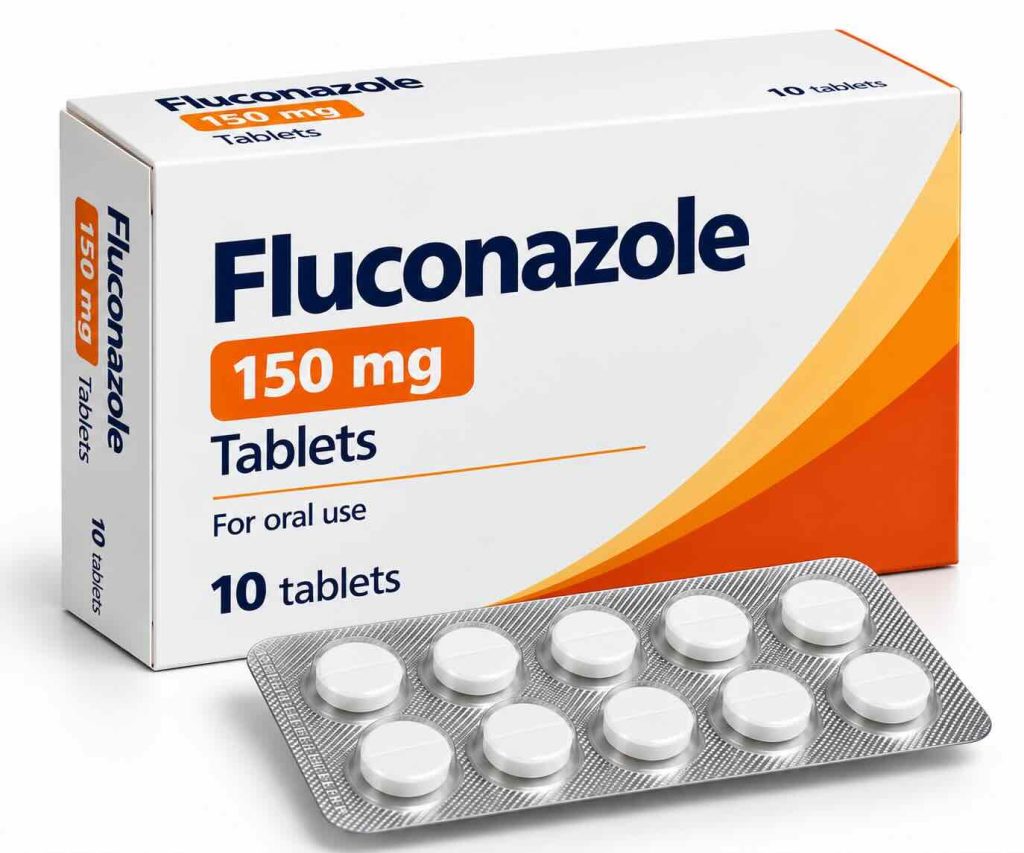
Mexican Pharmacy Offers for Fluconazole
Available through our partner pharmacies
-
Best Offer Farmacia Mexicana GenericUSD $28.99 View offer
-
Farmacias Similares GenericUSD $1.88
-
Farmacias Guadalajara GenericUSD $2.87
-
Farmacias del Ahorro GenericUSD $3.59
-
Farmacias Benavides BrandUSD $46.00
Disclaimer! This website is intended for general information only and does not operate as an online pharmacy. Speak with a doctor or another qualified healthcare professional before buying or using any medication.
The Limits of a One-Capsule Treatment
A 150 mg single oral dose appears in treatment guidance for uncomplicated vaginal candidiasis in appropriate patients. That does not mean every vaginal symptom is caused by yeast, or that one dose is the right plan for pregnancy, recurrent symptoms, a complicated infection or a patient with important medical conditions. Diagnosis matters because bacterial infections, sexually transmitted infections and skin conditions can produce overlapping complaints.
For oral thrush, esophageal candidiasis or more serious fungal disease, the strength, number of doses and duration can be very different. The clinician may also need to identify the organism and consider whether it is likely to respond to fluconazole. Repeating a single capsule whenever symptoms return can delay the diagnosis of a condition that needs another treatment.
Different Sites Lead to Different Plans
The location of a fungal infection is one of the most useful questions to ask before looking at package size. A 150 mg single-capsule box is familiar because of its use for selected uncomplicated vaginal yeast infections. An infection of the mouth or esophagus is evaluated and treated differently. Invasive fungal infections require an entirely different level of medical assessment and cannot be managed by choosing a larger number of retail capsules.
- Vaginal symptoms. The clinician considers whether the symptoms fit candidiasis, whether this is a first or repeated episode and whether the patient is pregnant or has a condition that makes the infection complicated.
- Oral or throat symptoms. White patches, pain or difficulty swallowing may need examination because several conditions can look similar. The treatment plan is not inferred from a one-capsule product page.
- Serious or invasive infection. This calls for medical testing and follow-up, with the antifungal choice based on the organism and the patient’s condition.
The point is not that one presentation is better than another. Each box answers a different practical need, and the prescription identifies which one belongs to the diagnosed condition.
Why the Mexican One-Capsule Listing Can Set the Wrong Expectation
In Mexican online pharmacies, Diflucan 150 mg is prominently sold as a box containing one capsule, and other fluconazole products can appear in the same format. That retail format is easy to remember. It can also make a patient think that every suspected fungal infection has a one-capsule answer. The package reflects one possible presentation, not a diagnosis or a universal course.
For a clinician-confirmed uncomplicated vaginal yeast infection in an appropriate nonpregnant patient, a single oral 150 mg dose may be used. Persistent symptoms, repeated episodes, severe inflammation, pregnancy or a different infection site change the decision. A patient seeking treatment for oral thrush or an esophageal infection should not interpret a one-capsule Mexican listing as an instruction to repeat it until symptoms disappear.
Mexican retailers also list multi-capsule fluconazole products, including 100 mg packs. Those products do not make the single-capsule box “smaller” in the way a travel-size shampoo is smaller. They may belong to different prescribed regimens. Comparing the boxes by price per capsule obscures the more important question: what condition was actually diagnosed, and what strength and schedule were prescribed for it?
The brand name does not settle the question either. A product labeled Diflucan and one labeled fluconazol may contain the same active ingredient, while two fluconazole boxes may differ in strength or count. The pharmacy can verify the product in stock and its label; the prescriber determines whether that presentation fits the patient’s infection and other medicines. This is the specific trap created by the familiar one-capsule Mexican shelf.
When Symptoms Keep Returning
Repeated episodes deserve a closer look than simply buying the same box again. The original diagnosis may have been incorrect, or the infection may involve a yeast species that responds differently. Another condition may also be present at the same time. A clinician can decide whether testing, a different medicine or a longer supervised plan is needed.
This matters particularly when symptoms appear soon after treatment or when a patient has diabetes, uses immune-suppressing medicines or has other reasons for recurrent infection. The question is not only whether the previous capsule seemed to help, but why the problem returned and whether fluconazole remains appropriate.
When Testing Changes the Answer
Symptoms alone are not specific enough to confirm vaginal candidiasis every time. A clinician may use an examination, microscopy, a culture or another test when the diagnosis is uncertain or episodes keep returning. Identifying a non-albicans Candida species can matter because some species respond less reliably to fluconazole than the organism usually associated with an uncomplicated infection.
A positive test also has to be interpreted with symptoms. Some people carry yeast without it being the cause of their current problem. Treating every positive result or every familiar symptom with another capsule can miss bacterial vaginosis, an irritation, a sexually transmitted infection or another condition. A repeated problem is therefore a reason to improve the diagnosis, not simply to buy a larger stock of the same medicine.
When a clinician prescribes a longer or repeated regimen, the schedule should be written clearly. A ten-capsule package does not create a ten-day plan, and a single-capsule package does not authorize repeated doses whenever symptoms remain. The treatment depends on the condition being treated and the patient using it.
Even One Capsule Deserves an Interaction Check
It can be tempting to treat a single-dose medicine as too brief to interact with anything else. Fluconazole does not work that way. It can inhibit enzymes involved in handling other medicines, and its effects may matter for a patient taking warfarin or certain heart-rhythm, seizure or cholesterol medicines. The exact risk depends on the combination, dose and patient; it cannot be judged from the size of the fluconazole box.
A useful pharmacy review includes prescription medicines, over-the-counter products and supplements, together with any history of liver disease or a heart-rhythm problem. This is especially important before a repeated course. The pharmacist or prescriber may recommend monitoring, a different antifungal or a change in the other medicine’s plan rather than simply saying that a convenient one-capsule treatment is safe for everyone.
Why the Site of Infection Matters More Than the Capsule Count
A single 150 mg capsule is widely recognized, but its familiarity can obscure the range of conditions for which fluconazole may be considered. An uncomplicated vaginal yeast infection is one setting. Oral thrush, esophageal candidiasis and serious infections inside the body require different evaluation, doses and treatment lengths. The site of infection determines what needs to be checked before the pharmacy price is relevant.
Difficulty swallowing, pain behind the breastbone or a person who is immunocompromised calls for more than a guess based on the appearance of a mouth patch. Likewise, itching alone does not prove vaginal candidiasis. Some conditions mimic yeast infection and will not improve with an antifungal. A clinician may examine the area, review the patient’s history or test a sample if the diagnosis or response is uncertain.
For invasive candidiasis, a retail one-capsule listing is particularly misleading. Treatment depends on the organism, the affected site, illness severity and sometimes hospital-based care. This is not a matter of multiplying the price of one capsule by the number of days. The product page can help identify a medicine; it cannot turn a serious infection into a self-selected course.
One Episode, Severe Symptoms or Recurrence?
The pattern of illness changes the questions a clinician asks. A first, uncomplicated episode may have a straightforward treatment plan after the diagnosis is established. Severe inflammation can respond less well to a brief regimen. Repeated episodes raise questions about the organism, diabetes control, recent antibiotics, immune status and whether the earlier diagnosis was correct. Treating every return with another single capsule can leave those questions unanswered.
| Situation | Question worth asking | Why another box may not answer it |
|---|---|---|
| First suspected episode | Is this actually Candida? | Several vaginal and skin conditions have similar symptoms. |
| Symptoms persist after treatment | Was the diagnosis or organism correct? | Some species respond less reliably to fluconazole. |
| Episodes keep returning | Are there contributing conditions or a need for testing? | Repeated self-treatment may delay a more useful plan. |
| Pregnancy | Which treatment is appropriate now? | Oral fluconazole should not be chosen from a routine retail listing. |
CDC guidance treats recurrent vulvovaginal candidiasis as a distinct situation, with diagnostic and longer-term treatment considerations. This does not create a schedule for every reader to copy. The regimen must match the confirmed condition and patient, and pregnancy changes the choice of treatment. A list of capsules and prices cannot replace that decision.
Safety Information
A short treatment can still interact with other medicines. Fluconazole can affect the enzymes that handle a range of prescription drugs, and it can contribute to QT-related heart-rhythm risk in the wrong combination. Warfarin is one familiar example where monitoring may need adjustment. A patient taking medicines for heart rhythm, seizures, blood thinning or other chronic conditions should show the complete list to a pharmacist or prescriber before using fluconazole.
- Liver: report prior liver disease and seek assessment for jaundice, dark urine, persistent nausea or unusual fatigue.
- Heart rhythm: mention a history of long QT, arrhythmia, low potassium or medicines that can prolong the QT interval.
- Pregnancy: ask a clinician about treatment rather than assuming an oral capsule is interchangeable with a topical option.
- Allergy and skin: a severe rash, blistering, facial swelling or breathing difficulty needs urgent care.
- Kidney function: repeated-dose regimens may require adjustment when kidney function is reduced.
The relevance of each point depends on the person and the planned regimen. A single dose and a prolonged course do not have identical exposure, but neither should be selected without knowing the other medicines and the reason for treatment.
Brand, Generic and the Question of Equivalence
Diflucan and generic fluconazole can contain the same active ingredient and strength, but a pharmacy search may mix different strengths and pack sizes on one screen. A 150 mg one-capsule product and a 100 mg ten-capsule product are not price alternatives for one identical course. A person should compare the exact prescribed strength, dosage form and number of units before comparing manufacturers.
The label deserves attention even if the photograph looks familiar. Some listings include a topical antifungal, a combination product or a different route. Packaging can also change while the active ingredient remains the same. The dispensing pharmacy should confirm the product that will actually be supplied, particularly when an online image is generic or stock is changing.
If the lowest-priced listing is a different pack, the apparent savings may disappear once the complete prescribed regimen is considered. Conversely, a larger box can leave unnecessary medicine when the treatment calls for only one dose. The correct comparison is the cost of the appropriate regimen, not the price of a product that merely shares the word fluconazole.
What to Discuss After Treatment
Follow-up depends on the condition. For an uncomplicated infection that resolves, the main question may be whether symptoms truly cleared. For persistent or recurrent symptoms, the clinician may need a sample or a different diagnosis. If the symptoms become more severe, spread, or include fever or significant pain, reassessment should not wait for another box to be ordered.
It is useful to record when the capsule was taken, whether there were other treatments, and how symptoms changed over the following days. This gives the clinician more information than “the medicine failed.” It may reveal that symptoms never matched candidiasis, that there was a short improvement followed by recurrence, or that a different infection is now more likely.
Someone who had a significant side effect should also keep the exact product name and dose. That information matters if another clinician later proposes an azole antifungal. The goal is not to assume that all future antifungal options are impossible; it is to give the next clinician an accurate history.
Pregnancy Makes a Familiar Capsule a Different Decision
Oral fluconazole is sometimes presented online as the quickest answer to vaginal yeast symptoms, but pregnancy changes the treatment conversation. CDC guidance recommends topical azole therapies for seven days during pregnancy and advises against oral fluconazole for this situation. Someone who is pregnant, may be pregnant, or is planning pregnancy should therefore ask a clinician which treatment is appropriate before choosing the convenient one-capsule listing.
Symptoms in pregnancy also deserve a diagnosis rather than a guess. Discharge and irritation can have several causes, and an antifungal would not treat all of them. The clinician may need to examine the patient or test a sample. The fact that a medicine was used safely in a previous, nonpregnant episode does not establish that the same choice is right now.
For a patient who has already taken a dose before realizing pregnancy is possible, the next step is to tell a healthcare professional the exact dose and date rather than drawing conclusions from a search result. Risk discussions depend on exposure and timing. A pharmacy comparison page should not turn general warnings into an individual prognosis.
When the Yeast Species Changes the Answer
Candida is not one uniform organism. Candida albicans is a frequent cause of vulvovaginal candidiasis, but other species may be less susceptible to fluconazole. This is one reason recurrent or persistent symptoms can lead to culture or another diagnostic test. A positive test also needs interpretation: Candida can be present without causing the current symptoms.
The distinction is clinically useful because a repeated capsule may briefly change symptoms while leaving the underlying problem unresolved. If a non-albicans species is found, or if symptoms persist despite appropriate treatment, the clinician may choose a different approach. The patient should not interpret “more resistant” as a reason to take extra fluconazole independently. A higher number of capsules is not the same as a diagnosis-based plan.
It also matters for household assumptions. Symptoms in one person do not prove that another person’s irritation has the same cause. Medicines should not be shared, and a leftover capsule should not be kept as a universal response to future symptoms.
How to Compare a Single-Dose Offer With a Longer Plan
A price tag on a 150 mg single capsule is easy to understand, but it belongs only to the product listed. A prescribed repeated-dose regimen, a topical treatment or a different strength has a different total cost and different instructions. The cheapest unit price may be irrelevant if the patient needs one dose, while a one-capsule box may be inadequate when the clinician has prescribed a longer course.
- Confirm the diagnosis and the active ingredient.
- Match the strength and dosage form to the prescription.
- Check whether the package contains one capsule or several.
- Ask the dispensing pharmacy to confirm stock and the actual manufacturer.
- Review other medicines and pregnancy status before treatment.
This order of checks keeps the comparison honest. It prevents a listing for a different strength or an unrelated combination product from being treated as a direct alternative to Diflucan or generic fluconazole. The final price may also depend on the pharmacy and delivery conditions, so the website figure should be confirmed before an order is placed.
What It Will Not Treat
Fluconazole is not an antibiotic for bacterial infections and will not treat viruses. A cold sore, for example, is usually caused by herpes simplex virus, so a fluconazole capsule is not an alternative to an antiviral medicine. Identifying what is actually causing a symptom is more useful than choosing a medicine because it is available in a convenient single-dose pack.
The same distinction applies to a sore throat or a skin rash. Some cases are fungal, many are not, and the appearance alone can be misleading. A product that helped a previous fungal infection should not become the default answer to every new irritation.